Shizuku on Android 17: What Works Now
Android 17 is no longer just an early preview. Google has moved the release through beta testing and platform stability, with Android 17 using API level 37. By August 2026, Android 17 QPR2 Beta 3 had also been released.
For Shizuku users, however, the Android version number tells only part of the story.
Does Shizuku work on Android 17?
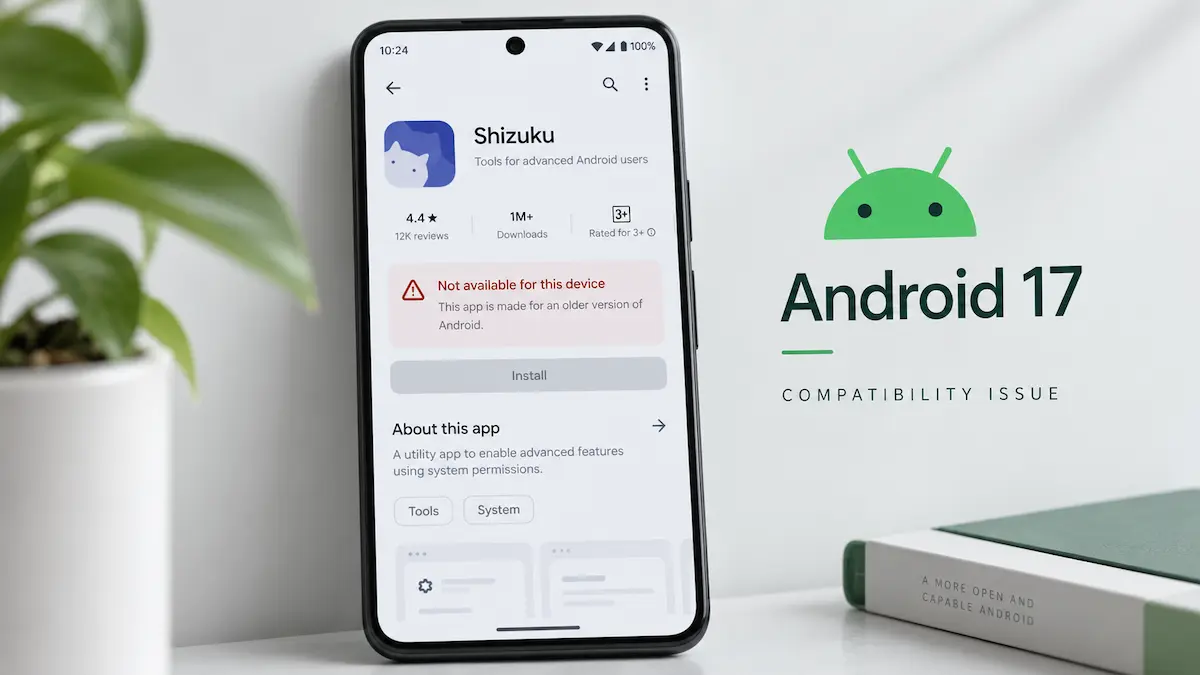
The short answer is: the current official Shizuku release should not be treated as fully compatible with Android 17.
The official Shizuku project still has open Android 17 reports. One report from a Pixel 10 Pro XL running Android 17 says Shizuku does not work as expected. Another Android 17 report describes the managed-app list remaining empty even though Shizuku had been started normally.
There are also reports from Android 17 beta builds where other apps cannot detect an active Shizuku service.
That gives users an important distinction:
Shizuku starting successfully does not necessarily mean every Shizuku-dependent app will work correctly on Android 17.
What still works?
The underlying Shizuku model has not changed. Shizuku starts its service through ADB or root and provides supported applications with access to Android system APIs.
The problem is Android 17 compatibility with parts of that process, not the basic idea behind Shizuku.
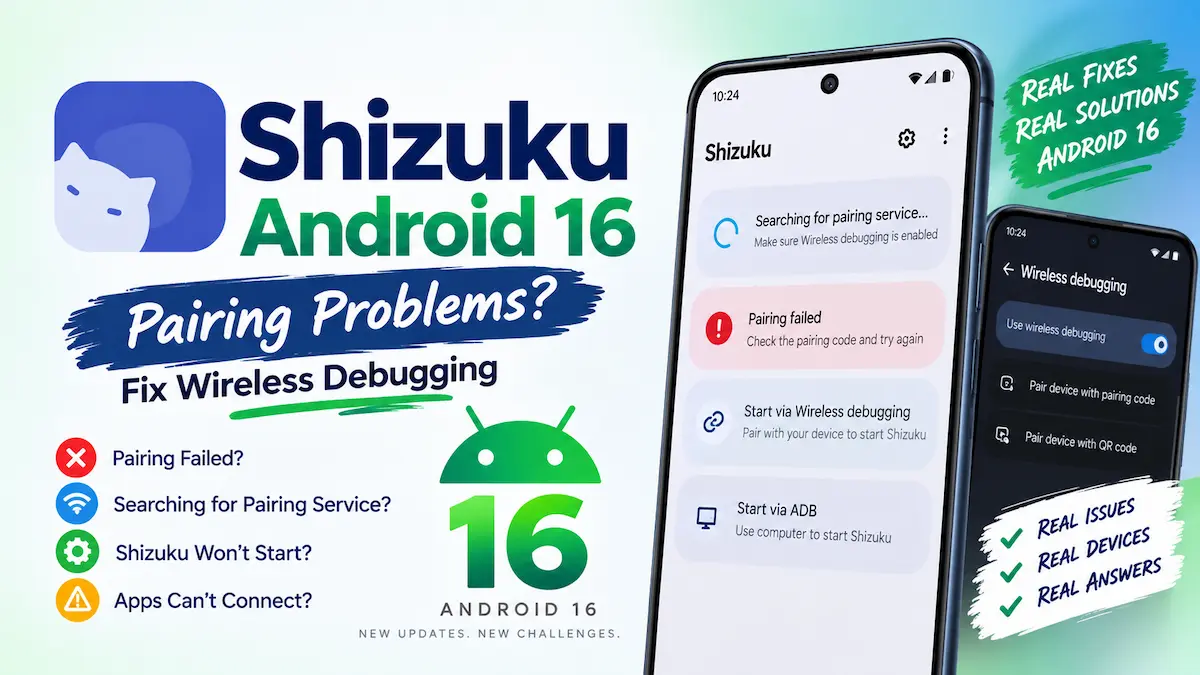
For users testing Android 17, watch for these symptoms:
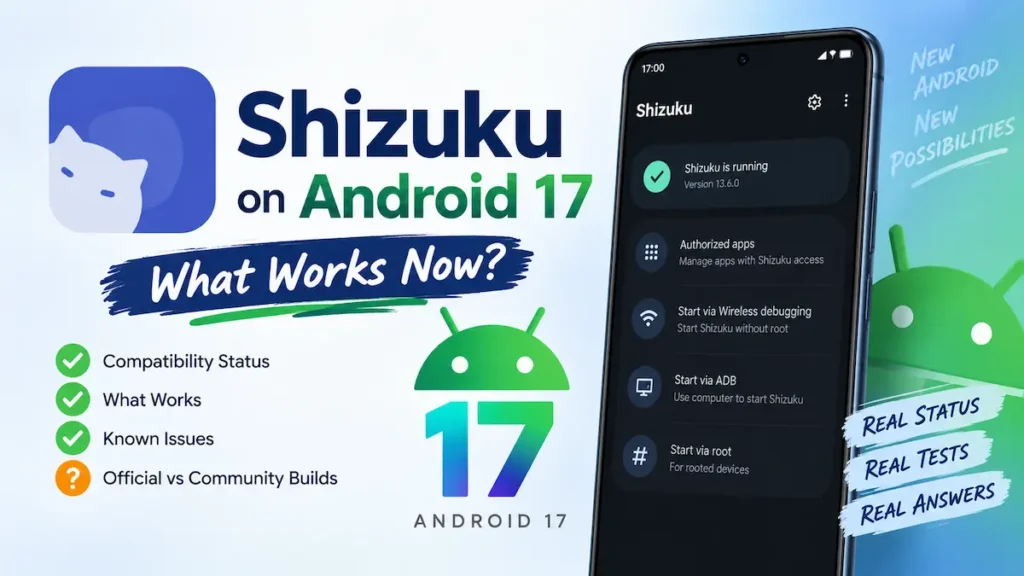
- Shizuku reports that its service is running.
- The managed-app list is empty.
- A Shizuku-dependent app cannot detect Shizuku.
- The authorization request does not appear.
- An app that worked on Android 16 stops connecting after the Android 17 update.
These behaviors have already been reported against the official project.
What about Shizuku 13.6.0?
Shizuku 13.6.0 is important because it is the official release associated with Android 16-era compatibility work. The official project’s current issue reports still identify 13.6.0 in Android 17 testing, but those reports do not establish full Android 17 compatibility.
So don’t interpret “Shizuku 13.6.0 installs on Android 17” as “Shizuku 13.6.0 is fully compatible with Android 17.”
Those are different claims.
Is there an Android 17-compatible fork?
Yes, but this needs careful wording.
A community fork called Shizuku 13.7.0-thedjchi was published on August 23, 2026, and its release information states that Android 17 support was added. Its APK metadata identifies Android 17/API 37 as the target.
That does not make the fork an official RikkaApps Shizuku release.
Users should therefore distinguish between:
| Build | Android 17 status |
|---|---|
| Official Shizuku | Compatibility issues remain |
| Community fork | Android 17 support is claimed |
| Android 17 itself | Current platform/API 37 |
This distinction matters when troubleshooting because a fix available in a fork should not be presented as an official Shizuku fix.
Should you move to Android 17?
If Shizuku is part of an important daily workflow, check compatibility before updating.
The official project has unresolved Android 17 reports involving service behavior and app detection.
If your phone is already running Android 17, first determine whether the problem is specifically the Android 17 compatibility issue rather than repeatedly reinstalling the same official APK.
If you depend on a particular Shizuku-enabled application, test that application too. A working Shizuku service does not guarantee that every dependent application has adapted to Android 17.
What should Android 17 users check?
Start with three things:
- Android version: Confirm that the phone is actually running Android 17/API 37.
- Shizuku build: Check whether you are using the official RikkaApps release or a community fork.
- Application behavior: Test whether Shizuku itself runs and whether the specific app can detect and request Shizuku access.
If you need the official Shizuku package, download apk from our main page and verify the release information before installing.
The key point is simple: Android 17 has arrived, but official Shizuku compatibility is not yet something users should assume. Current project reports show real compatibility problems, while community forks are beginning to add Android 17-specific support.
That makes the exact Shizuku build more important than simply searching for “Shizuku Android 17 APK.”